A beehive is a wonderfully complex machination – although at first glance it might seem like a chaotic, unorganized mess, there’s a lot more going on that might initially meet the eye.
The key points we’ll cover here are:
- What Is the Brood Nest and What Vital Function Does It Serve?
- What Is the Brood Nest Structure?
- What Is the Purpose of an Uncapped Cell in a Brood Nest?
- How to Inspect Your Brood Nest
- How to Get Help From Dadant & Sons With Managing Your Brood Nest
What Is the Brood Nest and What Function Does It Serve?
We use the term “brood” in beekeeping parlance to reference the eggs, larvae, or pupae of honeybees – the future population of the beehive. The brood nest, therefore, is the area of the beehive where young bees develop.
Given this role, a functional brood nest is obviously essential for the survival of the colony.
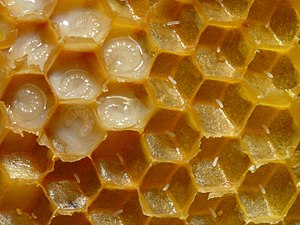
The queen bee, being the matriarch, lays her eggs in individual cells in the honeycomb, taking her time to carefully inspect each cell before dropping her eggs inside. Depending on available cell space and resources, she is capable of laying up to 2,000 honey bee eggs in a single day.
The eggs the queen lays will eventually become one of three types of bees:
- Queens (female, rare, one per hive)
- Drones (male, hundreds per hive)
- Worker bees (female but do not breed, thousands per hive)
Following her depositing of eggs in the center of the cells, worker bees come behind the queen to insert royal jelly, honey, and pollen (a protein source) for the larvae on the outer rim of the cells for them to feed on while they develop.
Here’s a high-definition video showing the queen laying her eggs overlaid by a helpful explainer of what’s going on:
Once the brood has passed through the initial egg and larvae stages (during which it appears as something akin to a grain of rice), it enters the pupa stage, when it begins to develop the visibly characteristic features of an adult honey bee – beginning with its eyes, legs, and wings, and finally sprouting small hairs before emerging from the womb into the world.
“Brood cells” are where, as the name suggests, the broods develop.
There are two types of developing brood cells:
- Capped Worker Cells. You can find these located towards the center of the frame, with a slight dome shape
- Capped Drone Cells. These are circular, have a larger diameter than worker cells, and have a higher dome. They are typically found at the outer rim of a frame
(The rare queens develop in unique structures called “supersedure cells” specially built in the center of frames when the hive requires a new leader or on the outside of the frame as the bees prepare to swarm)
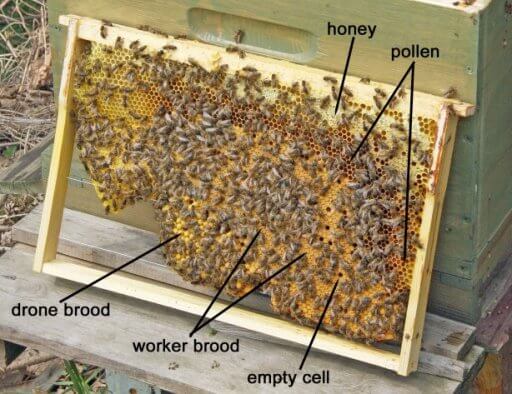
The brood nest cells (and surrounding cells) can serve any of the following functions:
- Honey storage
- Pollen storage
- Empty
- Drone brood
- Worker brood
Worker bees show remarkable adaptability in designing brood cells:
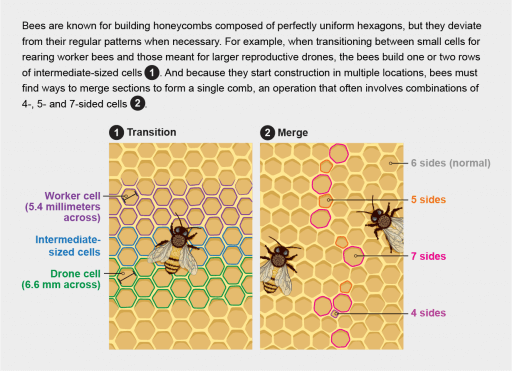
Source: Scientific American
The Structure of the Brood Nest: What Is a Healthy Brood Pattern?
The brood nest is often described as having a “football” shape over multiple frames. Accordingly, the tallest portion of the brood nest, or the center point of football in the analogy, is usually in the middle frame, with each successive frame behind being shorter.
On any single frame, you will find a consistent pattern: brood nest in the middle, pollen storage sites to the outside of that, and finally stores of honey outside of those.
“Brood pattern” refers to the layout of the brood of different types of bees. When the queen is young and healthy, she lays out eggs in optimal patterns conducive to a thriving hive. As she gets older, the pattern tends to become more erratic until she is eventually replaced with a new queen.
The ideal brood pattern follows the structure we explored above, with the greatest concentration of brood among the interior frames toward the center of the brood and tapering outward in the “football” shape. This allows for easier feeding and care of the developing young bees.
What Is the Purpose of an Uncapped Cell?
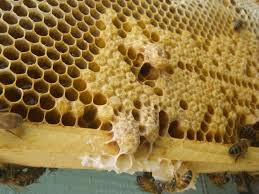
Many beekeepers will find an uncapped cell in their brood nest and panic on the belief that this might indicate a failing queen or some other problem – but, in reality, uncapped cells in the brood nest are often totally normal and even desirable.
When winter approaches, bees will take care to store excess honey into empty brood cells. Bee experts call this “backfilling” the comb – the primary purpose of which is to create some insulation to keep the hive warm in the coming cold months.
How to Inspect Your Brood Nest
As the general of your beekeeping army, it’s your responsibility to inspect your brood nest to make sure it’s healthy and functional. Here’s a quick guide to help you do that without damaging the hive:
- Select a warm day with plenty of sunshine for your inspection; in addition to providing ample light, this will ensure that the maximum amount of worker bees are in the field
- Calm the bees down with a sugary spray or smoke
- Remove one of the end frames and put it to the side
- Then slide each frame into the empty space, lift it up slowly, and inspect each side before putting it back exactly as it was before
- While inspecting, hold each frame over the brood box. This way, if the queen falls off, she’ll land back safely in the box and you’ll avert a palace crisis
- While inspecting, look for the optimal patterns that we discussed in the previous section that indicate a healthy queen
- Look for eggs in the cells, which are generally pearly white and are uncapped. This will tell you how active the queen has been in recent days
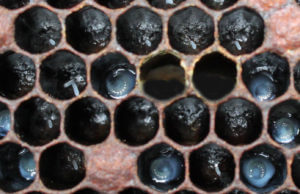
- Look for queen cells (supersedure cells). Such cells on the inside of the comb might indicate a failing queen, while cells on the outside of the comb might indicate a coming swarm
- Inspect the comb for nectar/honey stored in the cells, which are vital for feeding the brood
- Inspect the comb for pollen stored in the area as well
Get in Touch For All the Tools and Tips to Foster a Healthy, Thriving Brood Nest in Your Beehive
At Dadant & Sons, beekeeping runs in our veins; we’ve helped thousands of customers over the years who rely on our combined hundreds of years of beekeeping experience across multiple family generations.
If you’re looking for the top tools of the beekeeping trade, or if you’ve got additional questions about how to foster a thriving brood nest, don’t hesitate to contact us.