• Our History
  • American Bee Journal
  • Dadant Natural Beeswax Candles
  • Find A Location Near You
  • Visit our page on Facebook
  • Keep up with us on Twitter
  • Watch our instructional and fun videos on YouTube
  • Follow us on Instagram
  • Home
  • Shop
    • 10-Frame Equipment
    • 8-Frame Equipment
    • American Bee Journal
    • Aprons/Hats/More
    • Assembled Hives
    • Bee Feed & Supplements
    • Beeswax
    • Beginners Kits
    • Books
    • Candle Making
    • Containers
    • Creamed Honey
    • Frames
    • Foundation
    • Frame/Foundation Hardware
    • Feeds
    • Gifts
    • Gloves
    • Hand Tools
    • Helmets
    • Hive Accessories
    • Hive/Honey Moving
    • Honey Processing
    • Honey Selling
    • Jackets
    • Lip Balm Making
    • Queen Rearing
    • Medications
    • Smokers
    • Soap Making
    • Specialty Hives/Items
    • Suits
    • Supplements
    • Swarm Capture
    • Veils
    • New Products
    • Replacement Parts
    • Clearance Items
  • Learning Center
  • News
  • Resources
  • Dadant & Sons Catalog
  • Contact
  • Home
  • Shop
  • Learning Center
  • News
  • Resources
  • Our History
  • Dadant & Sons Catalog
  • American Bee Journal
  • Dadant Natural Beeswax Candles
  • Contact

Second-Year Beekeeper Equipment Needs

second-year beekeeper scraping cappings off of honeycomb to harvest honey

For a new beekeeper, getting through the first winter is a major milestone worth celebrating. As a second-year beekeeper, you may find your equipment needs growing as your colonies mature.

If you’re a new beekeeper and successfully kept your first colony through the winter, congratulations! You’ve gained valuable experience by setting up your first hive and learning to use basic beekeeping tools. From installing your first package bees to performing your first hive inspection, you’ve developed important skills that will serve you well for many years to come.

As a second-year beekeeper, you will likely find yourself presented with new challenges — as well as new opportunities. To meet the needs of your growing colony, make sure you have the proper tools and materials ready.

Equipment for a Second-Year Beekeeper
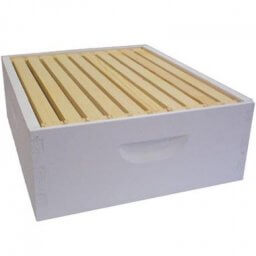
Dadant's C31501P 6 5/8 Painted Super comes assembled with ten 6 1/4'' grooved top-bar frames with beeswax coated Plasticell foundation.
Honey supers are a good addition for second-year beekeepers. Dadant’s C31501P 6 5/8 Painted Super comes assembled with ten 6 1/4” grooved top-bar frames with beeswax coated Plasticell foundation.

During their first year, your colony spent a good deal of time and resources drawing out new comb and building up population numbers. With good planning and supplemental nutrition to get them through the cold winter months, your colony should have a large number of workers ready to start collecting nectar and pollen come spring.

In your second year, you can plan on your colony needing more storage space for nectar and pollen. Adding honey supers to your hive gives the bees room to store the larger amounts of reserves typically generated by a second-year hive. This is also a good time to add a queen excluder to your set up, which is designed to prevent the queen from laying eggs in your new honey supers.

Extraction Gear for a Second-Year Beekeeper

Speaking of honey, most second-year beekeepers see a marked increase in honey production compared to their first year. To harvest this larger supply, consider purchasing extraction tools to make the job easier.

There are a wide variety of tools available for uncapping, extracting, filtering and storing honey. Many second-year beekeepers use simple handheld tools such as scratchers or rollers with a bucket to extract honey from their frames. Beekeepers with multiple hives may consider investing in a more automated system, such as an all-in-one extractor with uncapping tank.

Second Year Pest Prevention

Second-year beekeepers must know how to examine colonies for signs of honey bee pests. As the number of bees in your colony increases, the population of pests will likely grow, too. Be sure to stick to a regular schedule of comb inspections to check for hive pests such as varroa mites, waxworms and small hive beetles as well as signs of common honey bee diseases.


Have questions? Give us a call atĀ 888.922.1293Ā or contact theĀ closest Dadant branch.

For beekeeping equipment and educational materials, visit ourĀ online store.

  • Share on Facebook
  • Share on Twitter
  • Share on Google Plus
  • Share by Email

Search

News Categories

  • All Insect Related
  • Bee behavior
  • Bee health
  • Beekeeper
  • Benefits of Honey
  • Education
  • Events
  • Pollination
  • Promotions
  • Recipes
  • Research
  • Tools for Beekeepers
  • Uncategorized
  • Weather

Shop Beekeeping Supplies

  • Beginners Kits
  • Assembled Hives
  • 8 Frame Equipment
  • Hive Parts
  • Hive Accessories
  • Smokers & Tools
  • Clothing
  • Bee Feed & Supplements
  • Medications
  • Containers
  • Extractors & More
  • Clearance Items

Beekeeping & Honey Bees - Our Business Since 1863

Corporate Office - Hamilton, Illinois

  • 217.847.3324
  • [email protected]
  • 217.847.3660
  • Toll-Free Order Line 888.922.1293
    • Visit our page on Facebook
    • Keep up with us on Twitter
    • Watch our instructional and fun videos on YouTube
    • Follow us on Instagram

Shop Beekeeping Supplies

  • Beginners Kits
  • Assembled Hives
  • 8 Frame Equipment
  • Hive Parts
  • Hive Accessories
  • Smokers & Tools
  • Clothing
  • Bee Feed & Supplements
  • Medications
  • Containers
  • Extractors & More
  • Clearance Items
  • Learning Center
  • News
  • Resources
  • Dadant & Sons Catalog
  • Our History
  • American Bee Journal
  • Dadant Natural Beeswax Candles
  • Contact
  • Dadant & Sons, Inc.
  • 51 South 2nd Street
  • Hamilton, IL 62341
  • Ā© 2026 Dadant & Sons, Inc. All Rights Reserved
  • Website by CleverOgre